The collection of M: through the portrait gallery
© Marie Dreezen voor M Leuven
The collection of M
through the portrait gallery
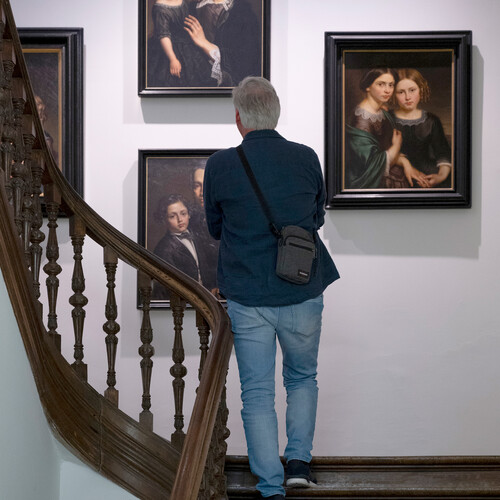
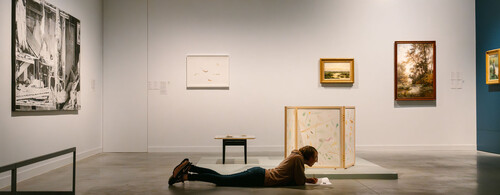
Since June 2024, Collection of M’ has offered a fresh, varied look at the museum’s impressive holdings. One of the new elements is the corridors, which have been reintegrated into the route as fully fledged exhibition spaces. The central hall of the former Vanderkelen-Mertens townhouse, for example, has been transformed into a portrait gallery with a twist. Until 2029, visitors will stand face to face here with people of rank and standing, for whom a portrait was a costly status symbol – but that’s not all. People who have tended to remain out of the spotlight, whether because of their gender, ethnicity or disability, also receive much-deserved recognition. All these portraits and sculptures have a common denominator: a fascinating backstory. In this edition of the ‘Paper Exhibition’, we look forward to telling some of them.
© Marie Dreezen voor M Leuven
PIERRE JOSEPH STEGER (1831-1899)
Miranda (1841-?) and her sister Isala Van Diest (1842-1916), c. 1855, oil on canvas, M Leuven collection
This tender portrait is one of four paintings depicting the Van Diest family. Pierre, the father, was a surgeon and obstetrician in Leuven. He and his wife Elisabeth had a son and six daughters. The Van Diests were unusually progressive for their era: their daughters received the same education as their son. Isala, shown to the right in the portrait, dreamed of following in her father’s footsteps and becoming a doctor. But there was a problem: the University of Leuven did not yet admit women. In 1879, Isala obtained her medical degree at the University of Bern in Switzerland. To have her diploma recognized in Belgium, she was required to complete an additional course at ULB in Brussels, which had only recently opened its doors to women.
From 1884, Isala was finally able to practise medicine in Belgium, becoming the first female doctor in the country. She chiefly treated women – many men had little faith in a female doctor – and was a fervent advocate for women’s rights.
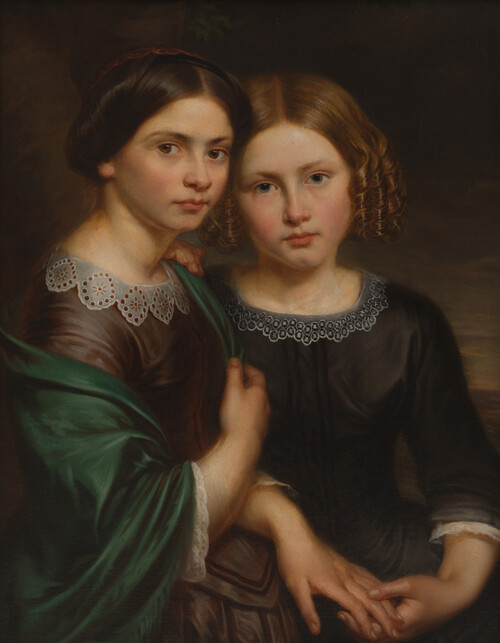
Pierre Joseph Steger (1831-1899), zussen Miranda (1841-?) en Isala Van Diest (1842-1916), ca. 1855, olieverf op doek, collectie M Leuven, bron: artinflanders.be, foto: Dominique Provost & Cedric Verhelst
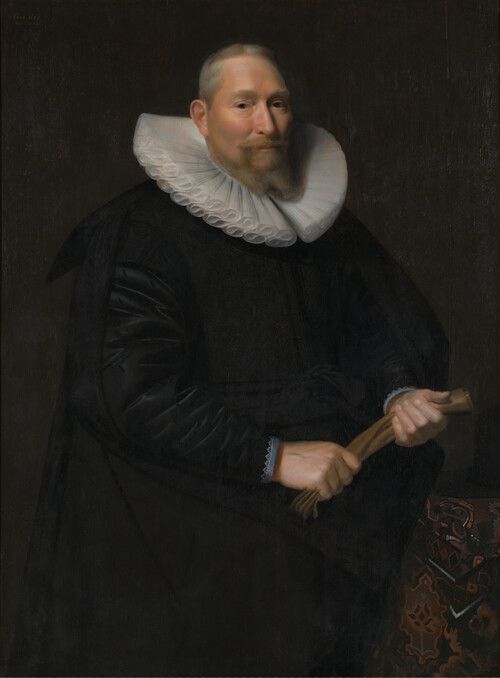
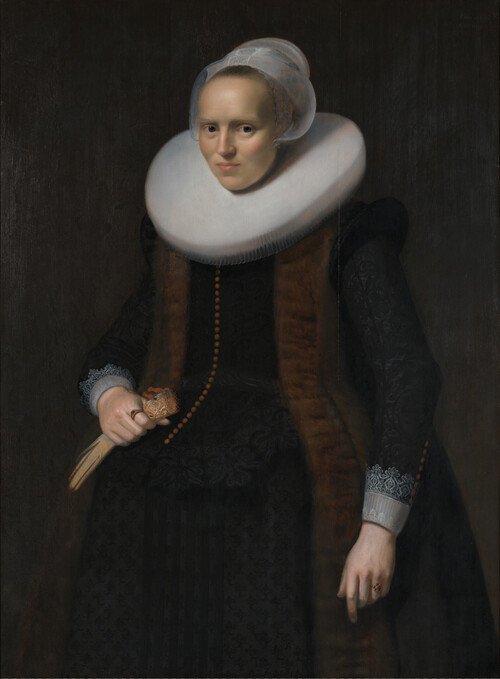
This spring, Isala finally made it to KU Leuven: her portrait, in which she poses with her sister Miranda, is on loan to the exhibition ‘Routes to Knowledge’ at the University Library. M will hang a recently restored double portrait of a Northern Dutch couple in its place, which the university donated to the museum in 1913. It is by Michiel van Mierevelt, a master at depicting the rich textures of lace, brocade, embroidery and fur.
NAVOLGER VAN FRANS I POURBUS?
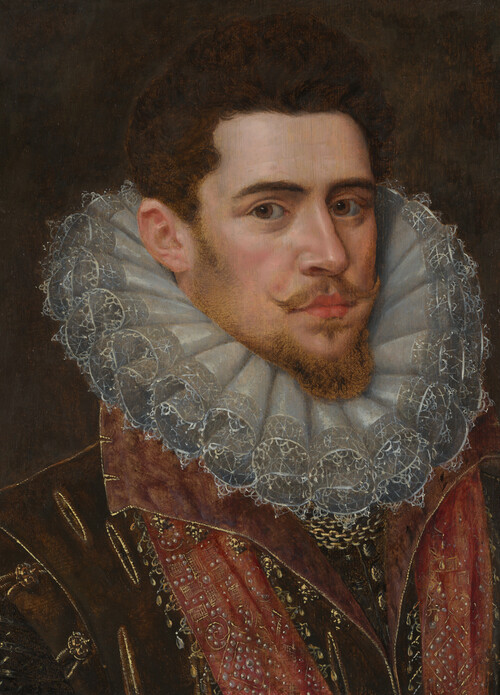
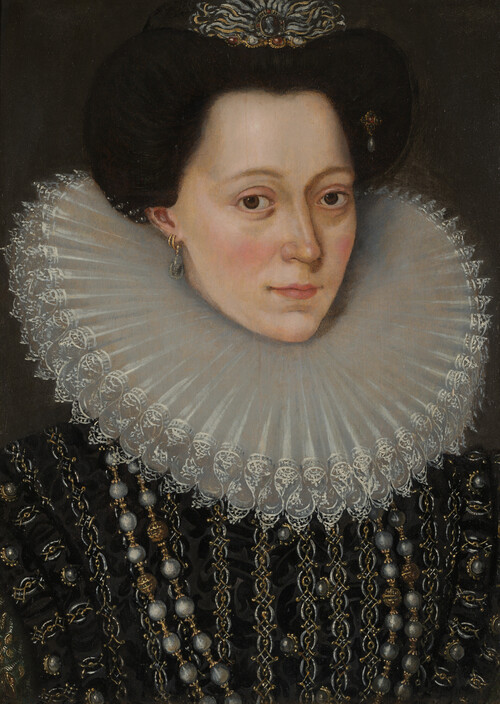
Karel van Arenberg (1550-1616) & Anne van Croÿ (1564-1635), 1588, oil on panel, M Leuven collection
A distinguished-looking couple in opulent garments – with gold embroidery, pearls and fine millstone collars – gazes directly at the viewer. In the past, these panels were thought to be seventeenth-century copies of earlier works. Recent conservation, however, revealed a significant discovery: beneath nineteenth-century overpainting, the late sixteenth-century portraits proved to be largely intact. With the help of a KU Leuven specialist, and through comparison with a family portrait in Arenberg Castle, the sitters were identified as the count and countess of Arenberg. They were painted in 1588, a year after their marriage.
(OMGEVING) NICOLAES ELIASZ. PICKENOY
Fragments of individual portraits, 1635, oil on panel, Van der Velden-Teurlings collection (long-term loan)
These two sisters are immortalized on ‘pendants’: matching portraits in which they are turned toward one another. Their distinguished and luxurious clothing – gleaming black dresses, silver-coloured sleeves embroidered with decorative motifs, large millstone collars, lace cuffs and caps – reveals that they came from a wealthy Northern Dutch family. Both sisters wear a hairpin, from which a costly pendant set with precious stones dangles. (Incidentally, M also has similar diamond pendants in its collection.) A hairpin is an oversized flat needle that is inserted into the hair. Ribbons could be threaded through its eye and incorporated into the hairstyle. Certain sources suggest that the hairpin is symbolic: by wearing it on the right-hand side, the woman on the left signals that she is married, unlike her younger sister.
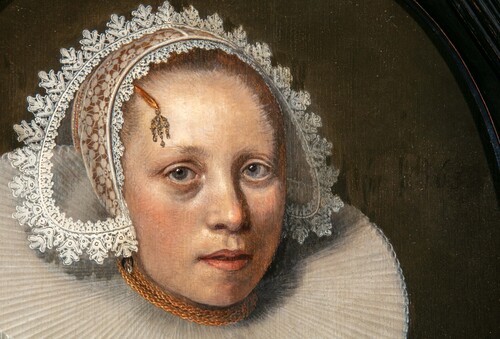
(omgeving) Nicolaes Eliasz. Pickenoy, twee zussen, 1635, olieverf op paneel, langdurige bruikleen Collectie Van der Velden-Teurlings © Collectie Van der Velden-Teurlings, foto: Pieter de Vries
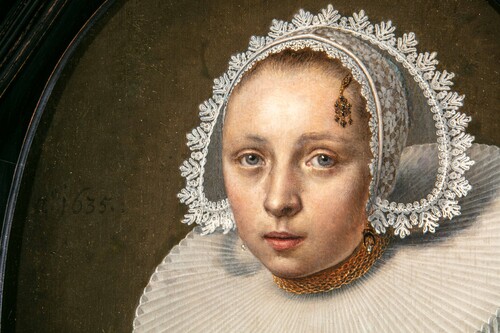
(omgeving) Nicolaes Eliasz. Pickenoy, twee zussen, 1635, olieverf op paneel, langdurige bruikleen Collectie Van der Velden-Teurlings © Collectie Van der Velden-Teurlings, foto: Pieter de Vries
CONSTANTIN MEUNIER (1831-1905)
‘Madame Tiberghien’, Hélène Lemmens (1858-1951), c. 1884-1900, oil on canvas, Flemish Community collection at M Leuven
Constantin Meunier is best known as a sculptor, but he was also active as a painter. This modest portrait of ‘Madame Tiberghien’ is among his finest works. He mainly relied on browns and earthy tones – typical of his painting from this period – for the clothing, the divan with oriental cushions, and the background.
Until recently, this bourgeoise lady from Brussels was known only by her husband’s name. Genealogical research conducted for ‘M’s collection’ has shown her to be Hélène Lemmens. In 1881, she married Lucien Tiberghien (1850-1930), a doctor from Sint-Joost-ten-Node. Wherever possible, M seeks to bring female identities out of the shadows – whether they are makers, donors or sitters.
Titles of works are also being re-examined with a critical eye. The most striking example in this portrait gallery is ‘Sakala and Jeanne De Raedt’ by Gustave Vanaise. Instead of the denigrating N-word used in the old title, we have restored the protagonist’s name, identity and dignity. Sakala was a Congolese prince who was ‘taken away’ to Belgium by members of an expedition.
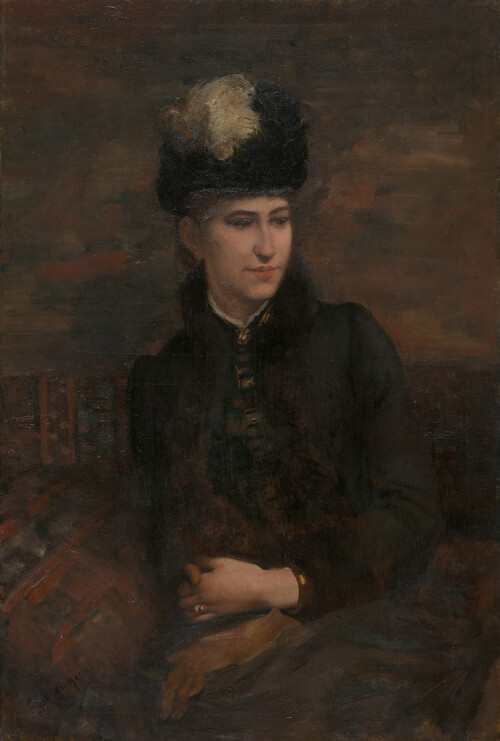
Constantin Meunier (1831-1905), ‘Madame Tiberghien’, Hélène Lemmens (1858-1951), ca. 1884 1900, olieverf op doek, collectie Vlaamse Gemeenschap bij M Leuven, bron: artinflanders.be, foto: Dominique Provost
RICHARD VAN BLEECK (1669/70-1748)
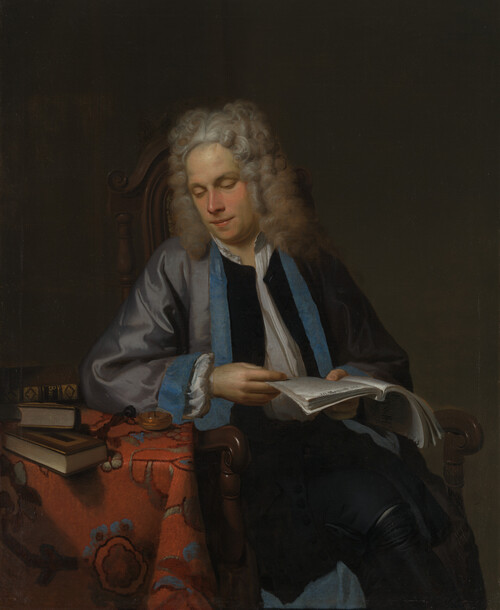
Poet William Congreve (1670-1729), c. 1715, oil on canvas, M Leuven collection
William Congreve was a seventeenth-century English playwright and poet. Hugely popular and successful during his lifetime, he is known for his humorous, satirical plays. A line from ‘The Mourning Bride’ (1697) still lives on in contemporary English: “Hell hath no fury like a woman scorned.” After 1700, Congreve left the theatre and focused mainly on poetry. His health declined, however, and he gradually went blind as a result of cataracts.
This portrait depicts Congreve as a blind writer, his eyes closed. The book in his hands is ‘The Provoked Wife’, a comedy by Sir John Vanbrugh (1664-1726), an architect, dramatist and close friend. Vanbrugh also designed the famous Blenheim Palace. Congreve was laid to rest in Poets’ Corner in Westminster Abbey, where more than a hundred writers and poets are commemorated with graves or memorials.
KAREL HENDRIK GEERTS (1807-1855)
Henri Joseph Rega (1690-1754), c.1849 - c.1852, painted plaster, M Leuven collection
Henri Joseph Rega was a Leuven-based physician who taught chemistry, anatomy and medicine at the university in the eighteenth century. He was elected rector several times and played a key role in the creation of the anatomical theatre, the herb garden, and the first university library in the former cloth hall on Naamsestraat. He also treated Archduchess Maria-Elisabeth of Austria (1680-1741), who presented him with a gold medallion encrusted with diamonds in gratitude – proudly displayed here on his toga. This medallion can also be admired nearby in the collection presentation. Rega’s many achievements are commemorated in Leuven. A street is named after him and his statue can be seen on the façade of the medieval town hall.
Sculptor Karel Hendrik Geerts created four stone statues of historical figures for the town hall façade in around 1849–1852, including that of Rega. At the time, Geerts lived and worked in the building that would later become the Vanderkelen-Mertens house. The plaster models for the four statues entered the museum’s collection thanks to the Vanderkelen family.
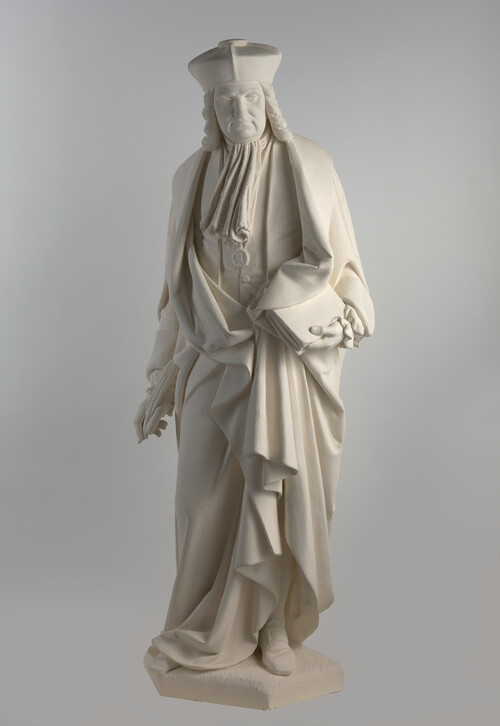
Karel Hendrik Geerts (1807-1855), Henri Joseph Rega (1690-1754), ca. 1850, collectie M Leuven, bron: artinflanders.be, foto: Dominique Provost
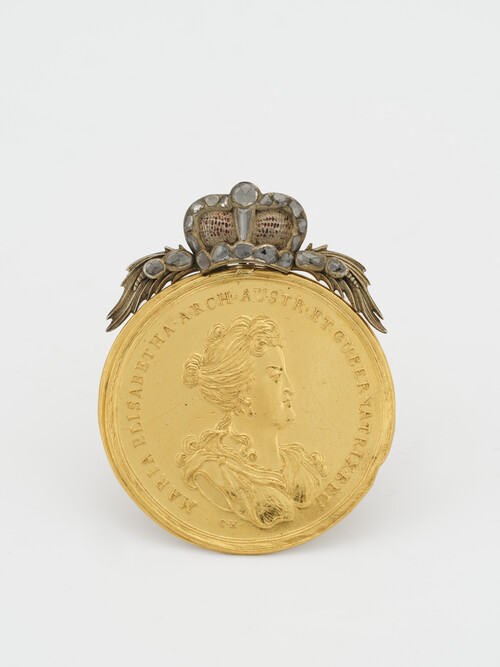
Johann Christoph Kemnitz, Penning met Aartshertogin Maria-Elisabeth van Oostenrijk (1680-1741), 1741, collectie M Leuven, bron: artinflanders.be, foto: Cedric Verhelst
© Elias Derboven voor M Leuven