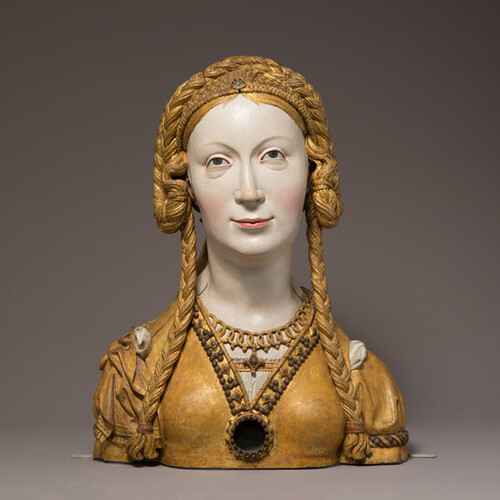
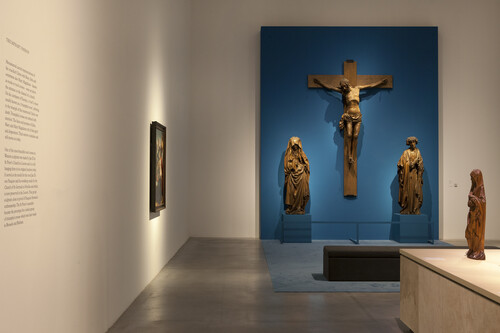
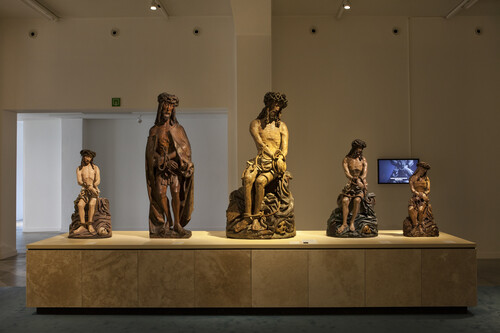
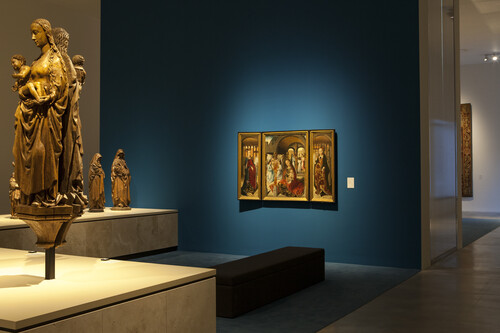
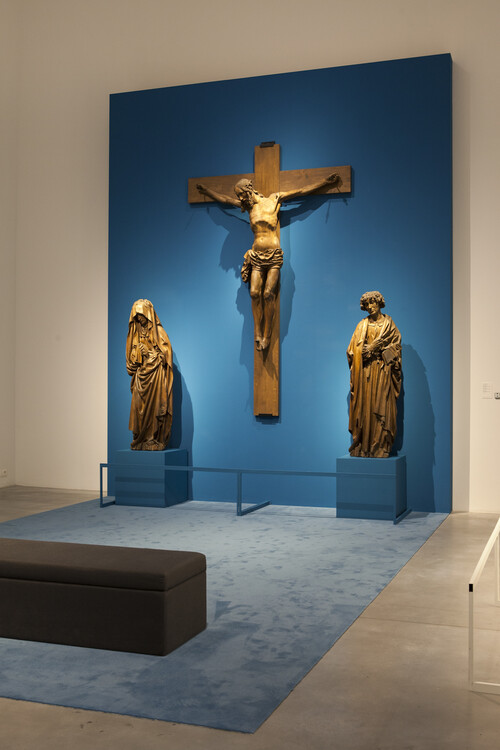
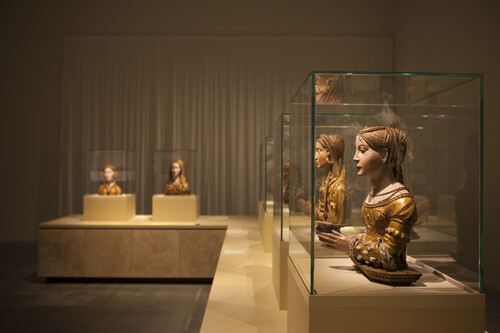
The best woodcarver in Brabant: that’s how Jan II Borman was known in the early 16th century. This autumn, M presents'Borman and Sons', the first ever retrospective exhibition about this master woodcarver and his family. Of the more than 280 known works by the Bormans, over 120 are coming to M, in addition to work by their contemporaries. A unique opportunity to get acquainted with this originally Leuven-based artist dynasty.
Don’t panic if you don’t recognize the name: surprisingly little is known about the Bormans. We know that at least six family members were active as woodcarvers, spread over four generations. The most renowned was Jan II Borman. He continued the idiom of Flemish Primitives such as Dirk Bouts and was a forerunner of Bruegel. You can safely call his work as virtuoso and influential as that of his contemporary Hieronymus Bosch.
A nose for business
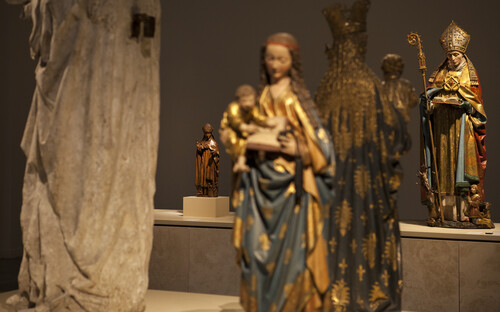
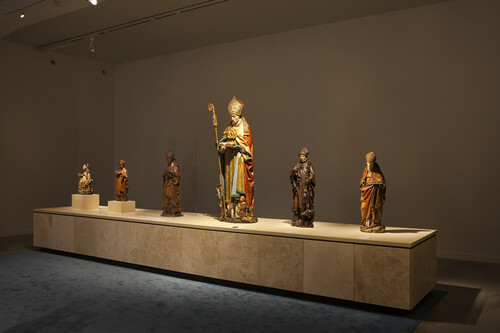
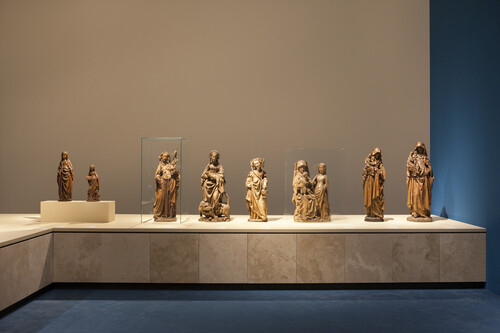
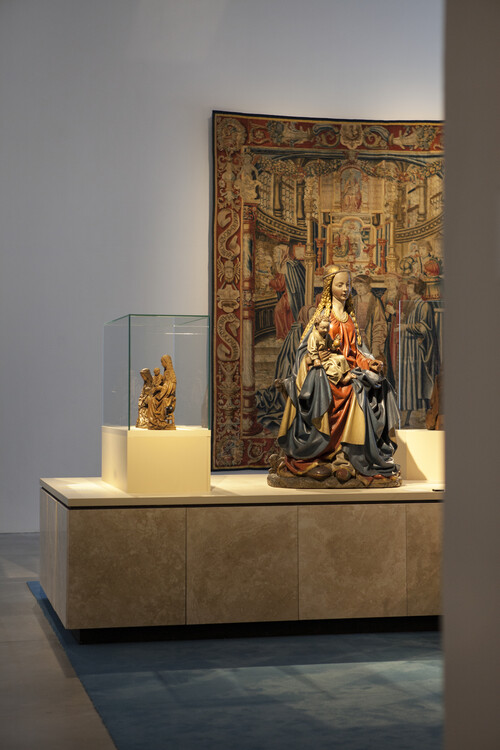
Jan II had a studio in Brussels, where he passed on his métier to his two sons, Jan III and Pasquier. The Bormans made wood, stone, and bronze sculptures – especially statues of saints and madonnas – but also larger pieces such as retables and funerary monuments. In their oeuvre, you can see how the late Gothic gradually makes way for the Renaissance.
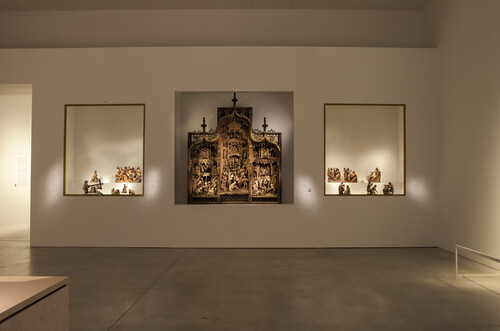
In addition to artistic talent, the Bormans also had a nose for business. They worked for wealthy clients: churches, monasteries, and guilds. They made a magnificent retable for the Leuven Archers’ Guild of St George, a fragment of which is shown in M. They also received commissions from the Habsburg court, which was in charge of the Low Countries at that time. Their studio was an SME avant la lettre. You can explore a virtual reconstruction of a medieval sculptor's workshop at the exhibition.
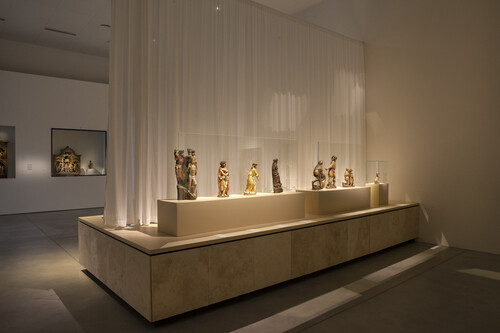
Zaalzicht of installatiezicht (c) M Leuven, foto: Miles Fishler
Zaalzicht of installatiezicht (c) M Leuven, foto: Miles Fishler
Zaalzicht of installatiezicht (c) M Leuven, foto: Miles Fishler
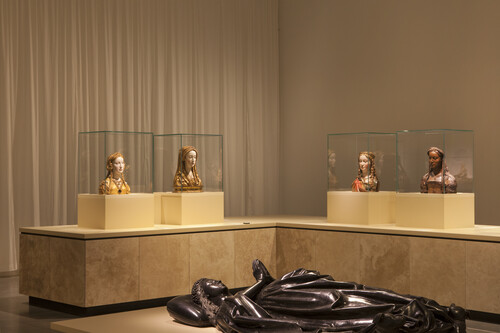
Zaalzicht of installatiezicht (c) M Leuven, foto: Miles Fishler
Zaalzicht of installatiezicht (c) M Leuven, foto: Miles Fishler
Zaalzicht of installatiezicht (c) M Leuven, foto: Miles Fishler
Zaalzicht of installatiezicht (c) M Leuven, foto: Miles Fishler
Zaalzicht of installatiezicht (c) M Leuven, foto: Miles Fishler
Zaalzicht of installatiezicht (c) M Leuven, foto: Miles Fishler
Zaalzicht of installatiezicht (c) M Leuven, foto: Miles Fishler
Zaalzicht of installatiezicht (c) M Leuven, foto: Miles Fishler
Zaalzicht of installatiezicht (c) M Leuven, foto: Miles Fishler
3D scan
The Bormans are not very well-known among the general public, but experts rate their oeuvre highly. Their works can be found in major European and American museums – M has received dozens of loans for the exhibition. A 3D scan of the rood cross from Leuven’s St. Peter’s Church, which cannot be moved, has been specially made for the exhibition. You can zoom in on it via a touchscreen. Of course, you can see the real cross with your own eyes in the St. Peter’s Church, one of Museum M’s external locations.
Back home
There are still considerable gaps in our knowledge about the Bormans. For example, we don’t know where their studio was located in Brussels, how many people worked there, and why the family disappeared from view so abruptly after 1540. But that does not mean that the researchers have been sitting still. The exhibition shows the results of recent research, initiated by M, which is highlighted extensively in a book published on the occasion of 'Borman and Sons'. For example, there are strong indications that founding father Jan I and his son Jan II worked in Leuven before the family moved to Brussels. In a sense, the exhibition brings the Bormans back home.
It is no coincidence that M is organizing 'Borman and Sons'. The museum is the Belgian centre of expertise for medieval sculpture, with a collection that is among the largest in the country. Moreover, M has made a habit of highlighting forgotten artists. Recall earlier expos about Pieter-Jozef Verhaghen, Jan Rombouts, or Michiel Coxcie. A list that only becomes more impressive with the addition of Borman and Sons.
Curator: Marjan Debaene
With the support of the M-art patrons via M-LIFE (the fund that M founded within the King Baudouin Foundation), UNIZO and the Cultural Service of the city of Leuven.
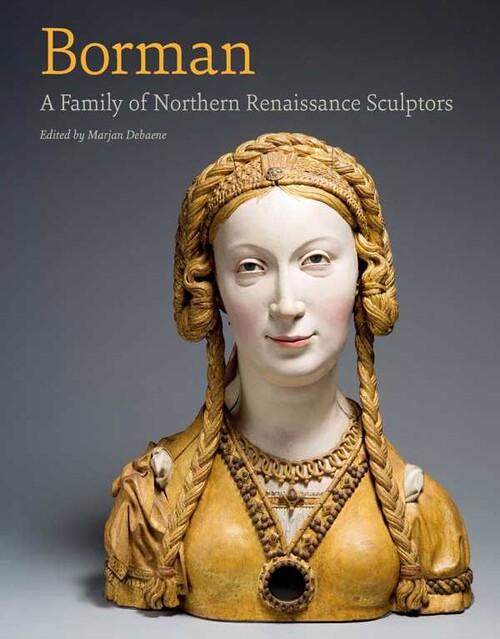
Publication: Borman. A family of Northern Renaissance Sculptors
“The Best Sculptor” is how Jan II Borman is described in a document dating from 1513. Ever since, Borman the man and his oeuvre are shrouded in mist. This late-medieval sculptor managed a busy workshop in Brussels, with commissions pouring in from religious institutions as well as from the bourgeoisie and princely rulers. He trained his sons Jan III and Passchier to become master sculptors after his own example and to have at least as shrewd a head for business as he himself. Borman was a virtuoso, a master but above all an innovator, who influenced many other sculptors. His iconic works are kept in the world’s greatest museums and churches. The book gathers essays by leading academics and presents a summary catalogue of all works attributed to the Borman family.
The paperback (€50) is sold out, the hardback (€100) is available through Brepol Publishers.
Borman. A family of Northern Renaissance Sculptors
During your visit
Ready to visit M? All the texts and audio that you can use during your visit can also be consulted digitally.
Een maandelijkse update van wat er in M te beleven valt?
Op de hoogte blijven van alle initiatieven, activiteiten en tentoonstellingen van M? Schrijf je hieronder in op de nieuwsbrief en dan zorgen wij op onze beurt voor jouw maandelijkse portie nieuws van M.