The oeuvre of Vasco Araújo (°1975, Lisbon) is rooted in literature and philosophy. The artist seeks to expose the gaze of ‘the other’ in a critical way, but he is also interested in the ambiguity of relationships, the fragility of systems, and the way in which we form our own realities. To this end, he uses a combination of various media.
Vasco Araújo
Vasco Araújo
Vasco Araújo (°1975) lives and works in Lisbon, Portugal. He has participated in several national and international group exhibitions, and has had solo exhibitions at Centro Cultural de España, Montevideo (2018); Autograph ABP, London (2016); MALBA, Buenos Aires (2015), Fundação Calouste Gulbenkian/CAM, Lisbon (2010); Jeu de Paume, Paris (2005); S.M.A.K., Ghent (2004); Museu de Serralves, Porto (2004), and others. He has also participated in a number of residential programmes, such as FLACC, Genk (2016); Pinacoteca do Estado de S. Paulo, San Paulo (2014); Récollets, Paris (2005); Core Program, Houston (2003/04).
Vasco Araújo’s work forms part of many private and public collections, such as those of the Centre Pompidou, Musée d’Art Moderne, France; Museu Colecção Berardo, Arte Moderna e Contamporânea, Portugal; Fundação Calouste Gulbenkian (Portugal); Museo Nacional Reina Sofía, Centro de Arte (Spain); Fundação de serralves (Portugal). His work O Jardim (2005) is currently being exhibited at KANAL, Centre-Pompidou Brussels.
Desire
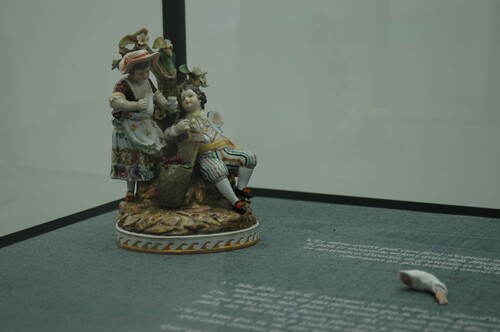
Araújo’s work is constructed around concepts like identity and sexuality, virtue and the morality of duty, emotion and the instincts of desire and passion. Araújo: “Desire in the broad sense is an important theme in my work. What does it mean to collect things, for example? Is it purely about possession or does the factor of love also play a role? And what effects do our desires have on our relationships with our loved ones?”
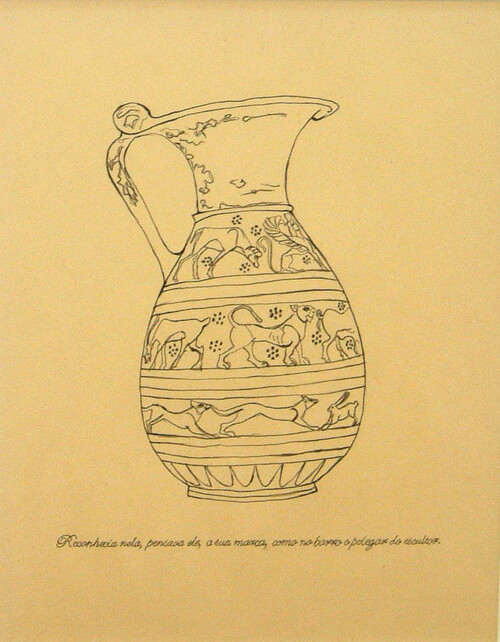
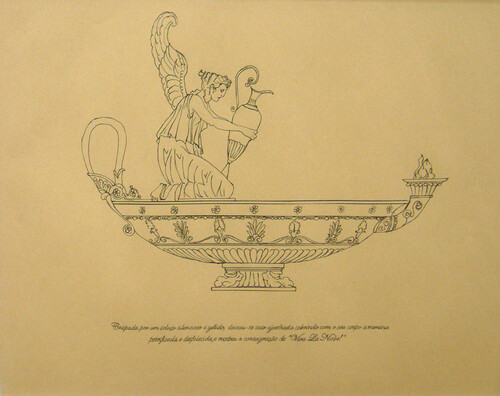
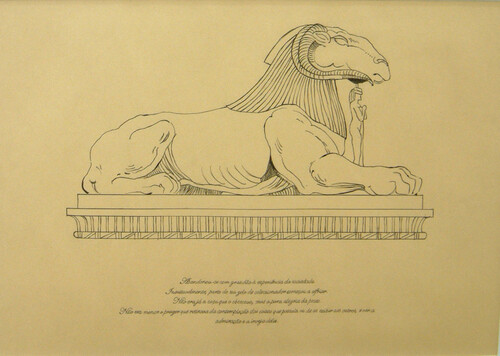
These are the questions he raises in works like 'O Amante' (2004), which shows a group of drawings and objects combined with text fragments that focus on collectors’ urge to own things.
Researching behavioural codes
Araújo develops his visual language by researching behavioural codes that reflect on the relationship between humanity and the world. To this end, he employs various media, such as sculpture, installation, video, photography, and performance. The role of the body, the voice, gestures, language, and social norms are all reconsidered in his poetry. He enriches this poetry with influences from opera, dance, modernism, or mythology.
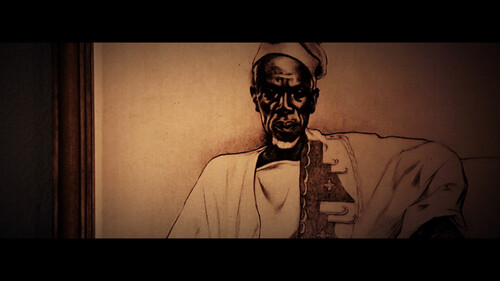
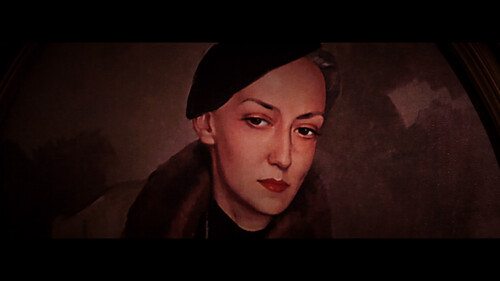
In the video 'Portrait' (2014), for example, this results in a dialogue between painted portraits that talk about their feelings, power games, and one’s relationship with the other. The work tells us something about our relationships, but it is likewise about memories and our memory itself.
Statues as memory
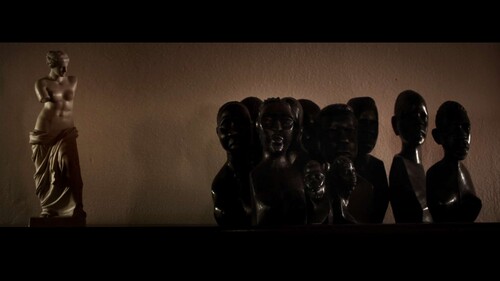
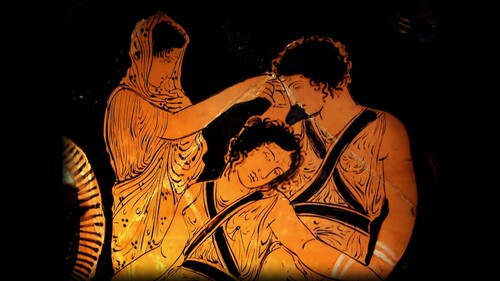
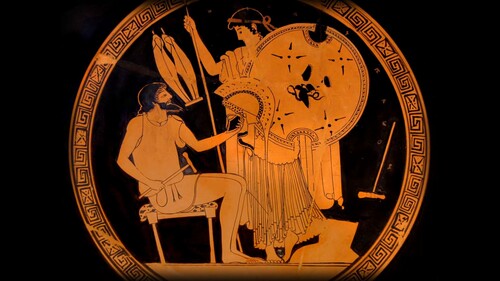
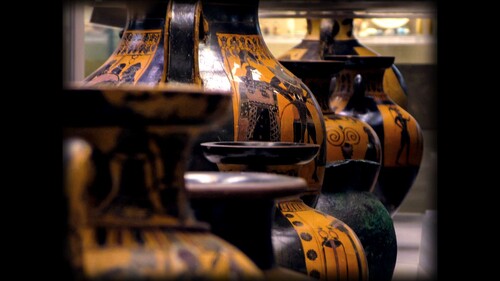
Vasco Araújo also refers to the past often. “How do we construct ourselves based on our history? Old objects, such as statues, are in a certain sense our memory. They reflect on people who lived at a certain point in history. They thus enable us to look into the past and on that basis, to reflect on our own time.”
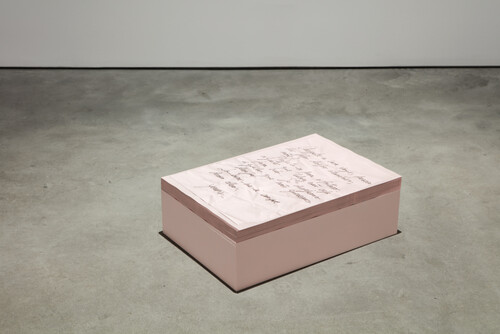
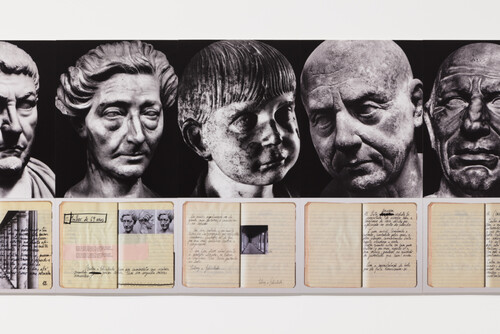
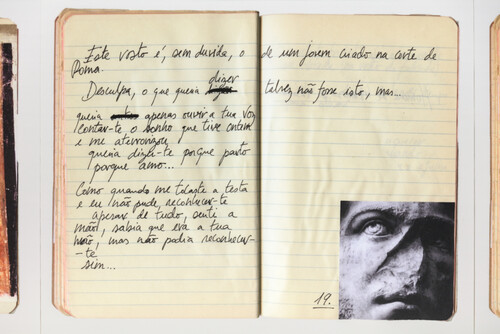
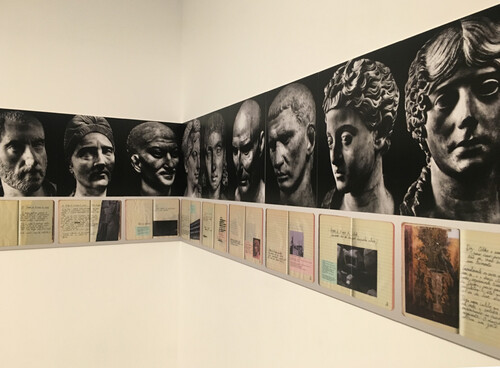
We find this line of thought in the recent work 'Notebook'(2018), in which Araújo ascribes character traits to forty portraits from Antiquity. The result seems almost like the notebook of a filmmaker describing his characters.
In this solo exhibition, Araújo presents a selection of works from the period between 2004 and 2018, with a focus on recent work.
Curator: Eva Wittocx
Vasco Araújo
Vasco Araújo
Vasco Araújo
Vasco Araújo
Vasco Araújo
Vasco Araújo
Vasco Araújo
Vasco Araújo
Vasco Araújo
Vasco Araújo
Vasco Araújo
Vasco Araújo
Vasco Araújo
Vasco Araújo
Vasco Araújo
Vasco Araújo
During your visit
Ready to visit M? All the texts that you can use during your visit can also be viewed digitally.
Een maandelijkse update van wat er in M te beleven valt?
Op de hoogte blijven van alle initiatieven, activiteiten en tentoonstellingen van M? Schrijf je hieronder in op de nieuwsbrief en dan zorgen wij op onze beurt voor jouw maandelijkse portie nieuws van M.