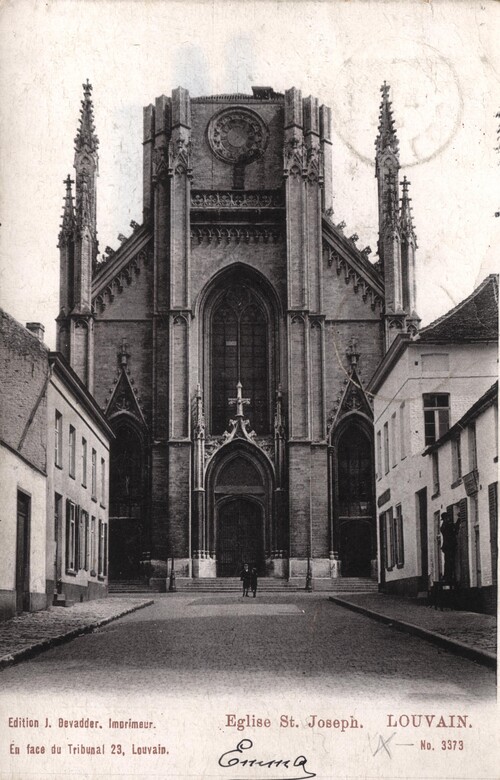
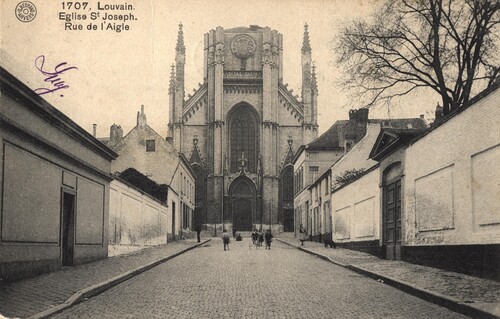
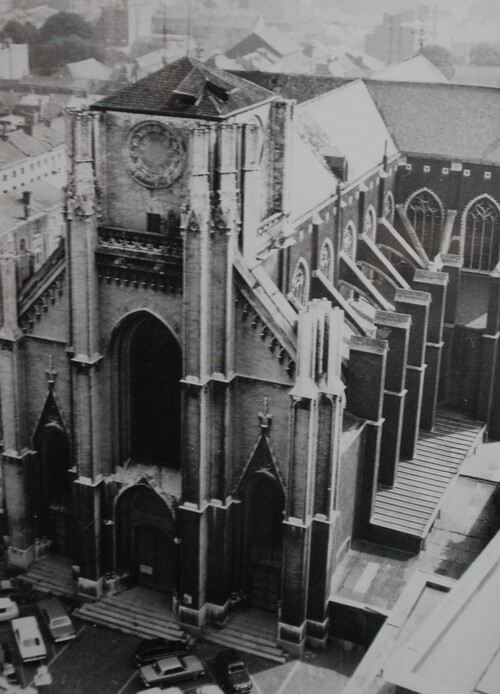
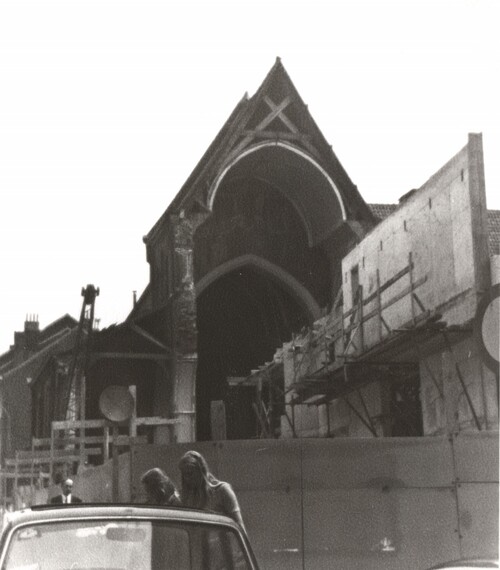
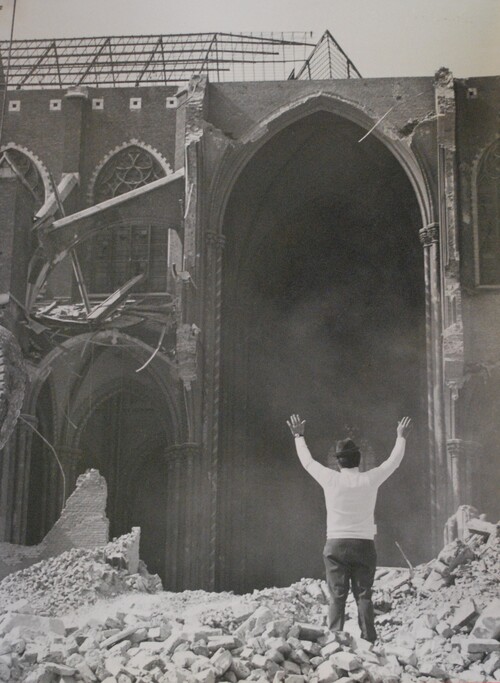
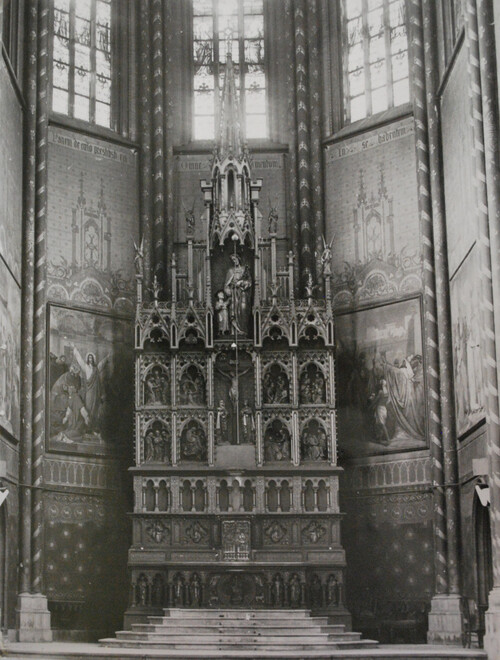
In 1970, Saint Joseph’s Church in the Ravenstraat, Leuven, was condemned. The church had been closed since 1966, but when stones began to fall from the façade, the building was completely dismantled. It made way for the KU Leuven Faculty of Arts. It had been a part of the cityscape of Leuven for a century, a veritable ‘landmark in the skyline’ due to its location and monumentality.
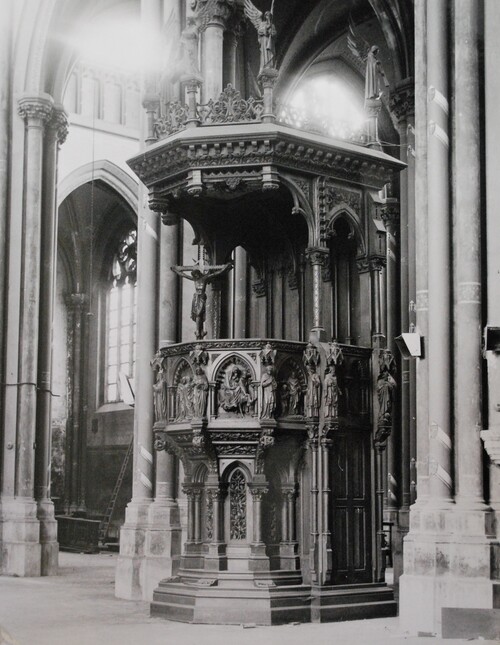
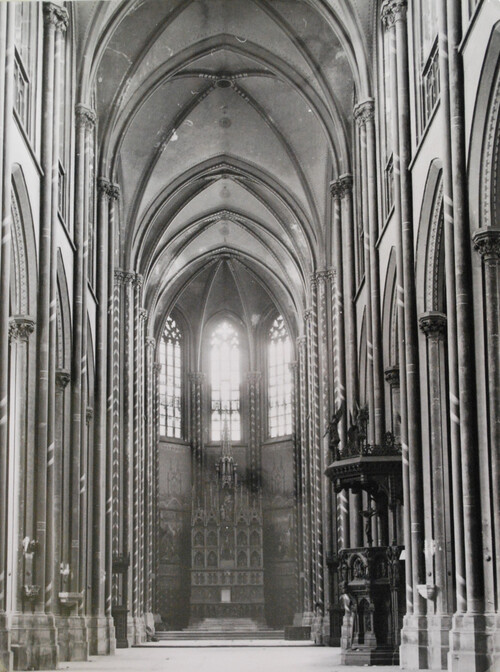
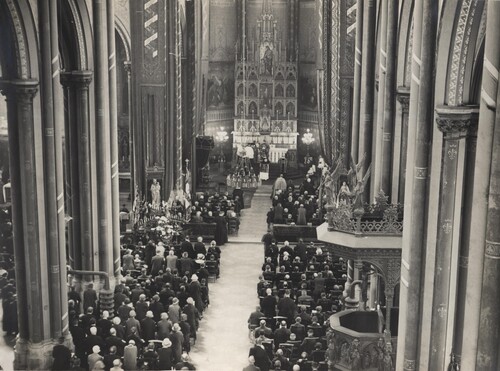
The church was built in the neo-Gothic style between 1860 and 1871. The choice of style was not simply a matter of taste or fashion; it was motivated by a well-considered religio-political agenda. In the 19th century, the Catholic Church launched an offensive against increasing secularisation. Gothic forms were ideal propaganda tools in this endeavour, and many new, neo-Gothic buildings were erected. Leuven took advantage of this revival and became the home of several leading sculpture workshops that were specialised in neo-Gothic furniture and sculpture groups. Many of these workshops contributed to Saint Joseph’s Church. This collection evokes the lost Church of Saint Joseph once more. M Leuven tells its story through objects from the church and presents a selection of archive material and photos.
Thanks to the work of the then curator Jan Crab, 107 objects from the Church of Saint Joseph became part of the collection of M; mostly statues, ornaments and liturgical furniture made by Frans Vermeylen and the Goyers brothers. The exhibition ends with a painting by Constantin Meunier, which was originally one of the decorations in the church.
Een maandelijkse update van wat er in M te beleven valt?
Op de hoogte blijven van alle initiatieven, activiteiten en tentoonstellingen van M? Schrijf je hieronder in op de nieuwsbrief en dan zorgen wij op onze beurt voor jouw maandelijkse portie nieuws van M.