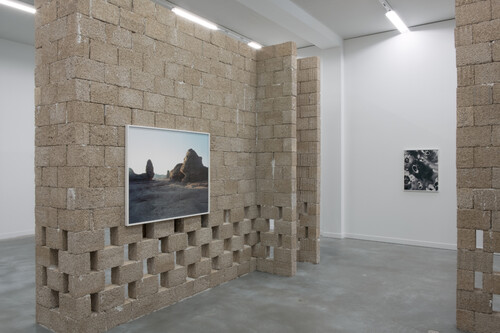
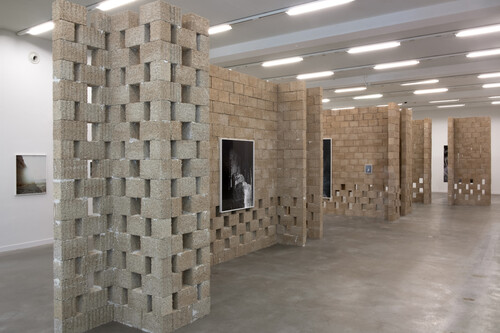
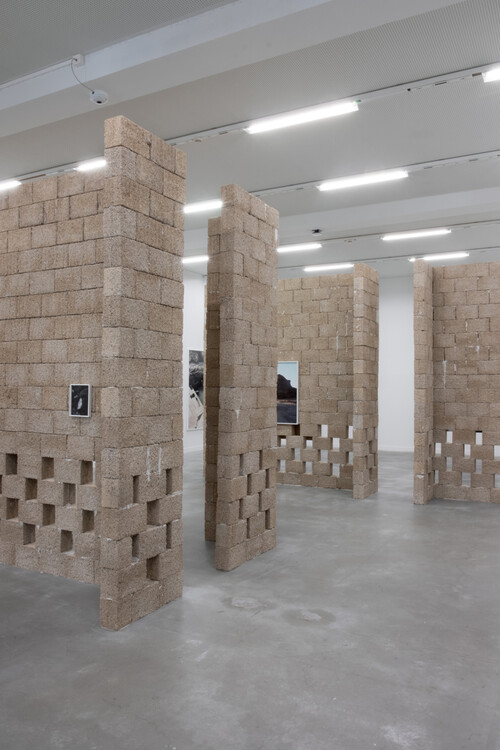
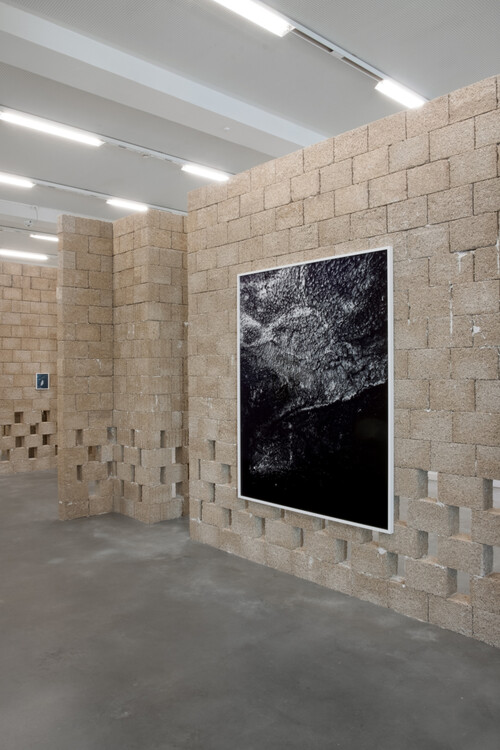
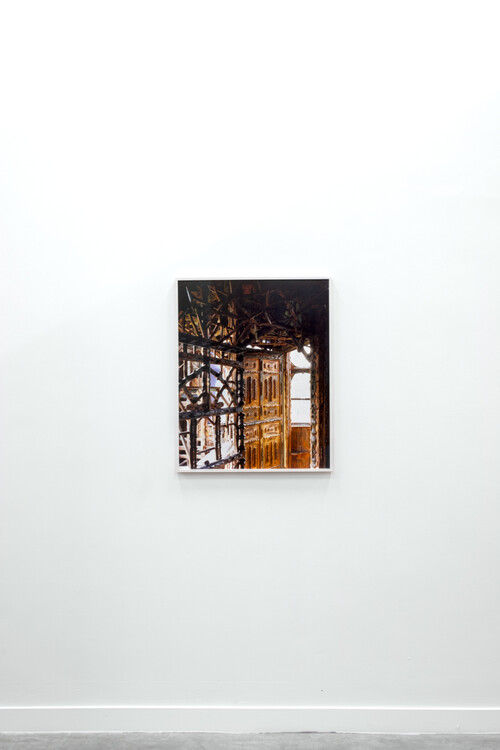
Jim Campers’ (°1990, Antwerp) photographic works press home the profound contemporary relevance of the radical social critiques of the 60s and 70s. In 'Forward Escape into the Past', Campers’ first solo exhibition, the artist is bringing together his two most recent series of photographs.
A journey through time and ideology
The photographic styles of the Belgian artist Jim Campers are highly varied: some of his images resemble scientific illustrations or travel journals, while others recall advertisements or visual experiments.
Yet not a single work of his is non-committal. Research plays an essential part in the way he approaches his subjects and chooses the geographical locations for his photographs. Campers thus immerses himself in highly specialized subjects via underground literature or online blogs.
In this exhibition, Campers is showing photographs from his two most recent projects, which are situated at the intersection of nostalgia and visionary utopia. His recurring themes include withdrawal from society, a life in harmony with nature, and the counter-cultures of the 1960s and 1970s. Hence the title 'Forward Escape into the Past', which is suggestive of an alternative future for humanity far removed from technological progress, in which human beings seek a connection with their past and with nature.
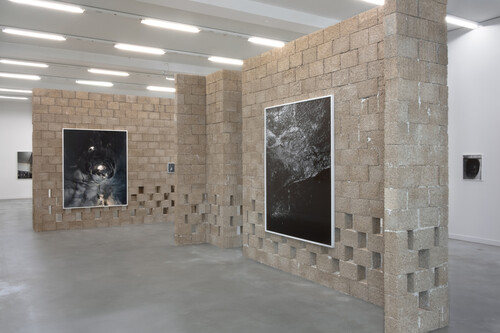
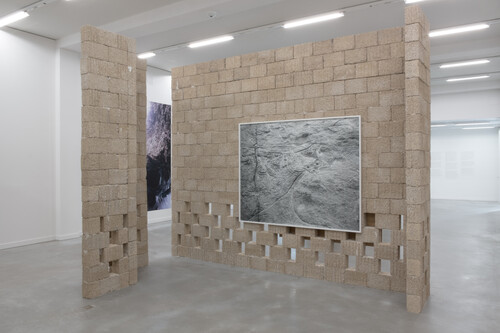
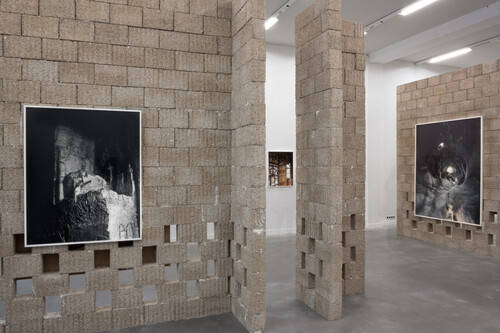
Campers devised a staging for 'Forward Escape into the Past' that consists of walls built of hemp blocks. This unusual building material is in keeping with ecology, sustainability, technological ingenuity and a return to nature: all themes that form a thread running through the exhibition.
Jim Campers
Jim Campers
Jim Campers
Jim Campers
Jim Campers
Jim Campers
Jim Campers
Jim Campers
Let’s kill the moonlight (FC)
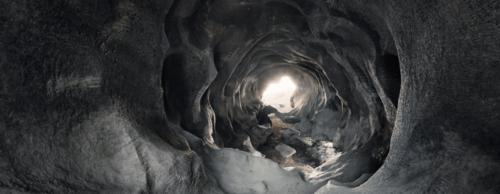
The photographic series 'Let’s Kill the Moonlight (FC)' derives from the convictions of the American mathematician and terrorist Theodore “The Unabomber” Kaczynski (1942). From the 1970s onwards, he developed a critique of relentless technological advancement and championed a restoration of freedom in harmony with nature. Kaczynski reinforced his message by committing a series of attacks with letter bombs, killing and wounding several people.
The title of Campers’ photographic series combines Kaczynski’s ideas with those of the Italian Futurists. 'Let’s Kill the Moonlight' was one of the elements from the 'Second Futurist Manifesto', written by Filippo Tommaso Marinetti. Unlike Kaczynski, Marinetti actively glorified the destructive power of technology.
Intranaut
Campers’ second series of photographs, Intranaut, draws on the theories of the American writer, philosopher and anthropologist Terence McKenna. The latter set out in his Stoned Ape hypothesis to modify the process described by standard evolutionary theory, by ascribing a crucial role to the use of the psychedelic mushroom Psylocybin cubensis by prehistoric humans. According to McKenna, consumption of this fungus and its hallucinogenic powers played an important role in the formation of the brain, more specifically in the creation of what distinguishes people from other creatures: human self-reflection.
Curator: Valerie Verhack
During your visit
Ready to visit M? All the texts that you can use during your visit can also be viewed digitally.
Een maandelijkse update van wat er in M te beleven valt?
Op de hoogte blijven van alle initiatieven, activiteiten en tentoonstellingen van M? Schrijf je hieronder in op de nieuwsbrief en dan zorgen wij op onze beurt voor jouw maandelijkse portie nieuws van M.